
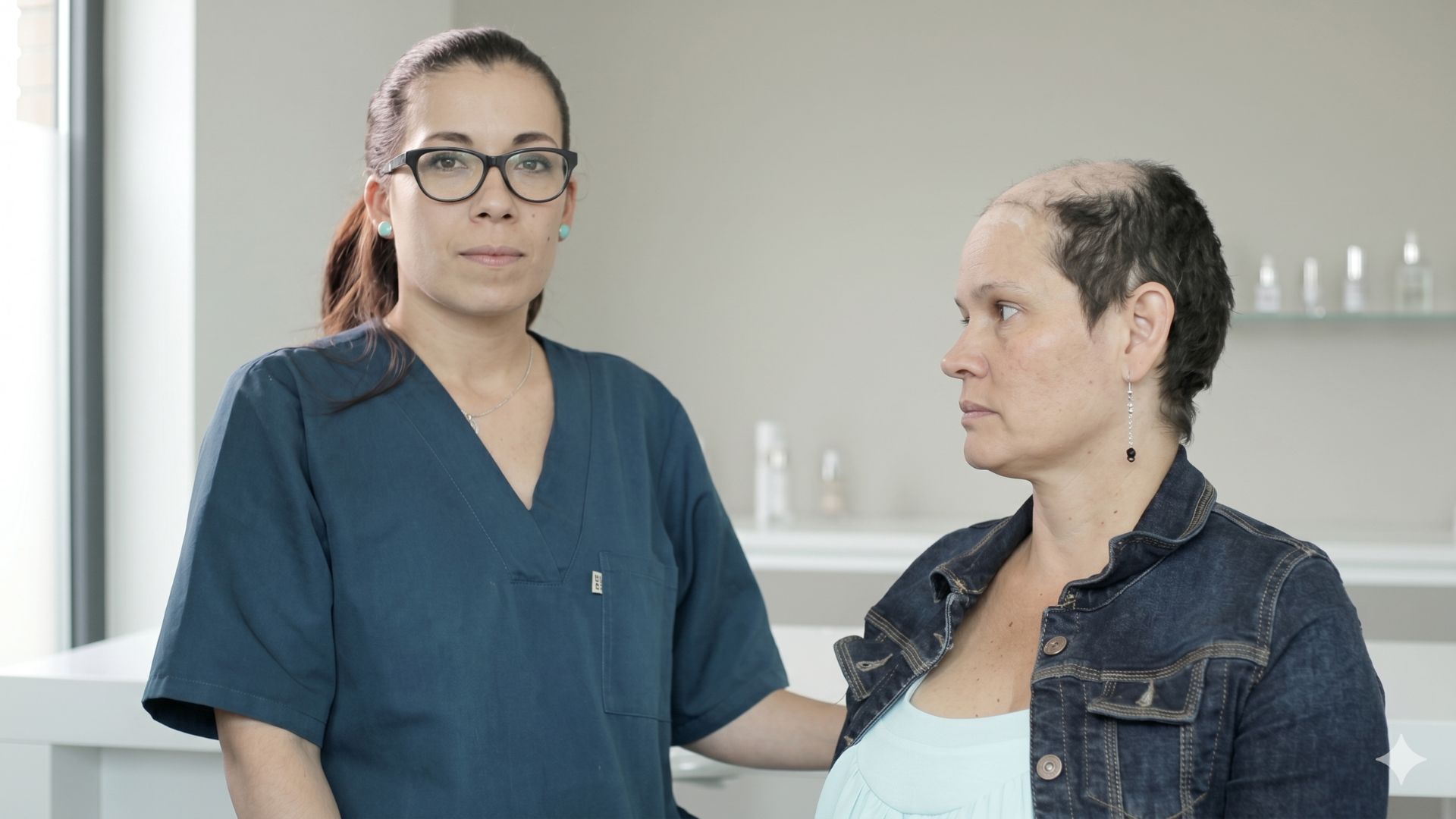
Female hair loss is not a rare or marginal issue. It is an increasingly frequent reason for medical consultation, and at our clinic it represents 40% of all cases we evaluate. That number alone reflects how common this condition is, and how many women are living with it, often in silence.
The conversation around hair loss has historically centered on men. Baldness in men is widely acknowledged, discussed, and treated. But hair loss in women carries a different weight — socially, emotionally and clinically — and for a long time it went largely unaddressed in both public discourse and medical practice.
«Female alopecia is not a minority concern. It is one of the most common reasons women seek specialized medical evaluation, and one of the most undertreated».
The emotional weight
Hair loss affects women differently, but it affects them just as deeply
For many women, hair is not simply a physical feature. It is closely tied to identity, femininity, and self-image in ways that are difficult to articulate but easy to feel. When it starts to thin or fall, the impact is rarely limited to the mirror.
Anxiety, loss of confidence, and social withdrawal are common responses to female hair loss. These are not overreactions: they are understandable consequences of a condition that touches something deeply personal.
Recognizing this is the first step toward treating it properly. Female alopecia is a medical issue. It has causes, it has patterns, and it has treatment options. It does not have to be accepted as inevitable.
What to look for
Signs that may indicate female hair loss
A widening part line
One of the earliest visible changes is a part that gradually appears wider than before, particularly along the top of the scalp.
Increased shedding
Noticing more hair than usual on the pillow, in the shower drain, or on a brush, especially when it persists over weeks rather than days.
Reduced density
Hair that feels lighter, thinner, or less full when gathered into a ponytail or styled, without a clear explanation like seasonal change.
Scalp visibility at the crown
The scalp becoming visible through the hair at the top of the head is a common presentation in female pattern hair loss.
These signs are provided for general awareness only and do not constitute a medical diagnosis. A specialist evaluation is the only way to identify the cause and appropriate course of action for each individual case.
Female alopecia is not a single condition: it has different presentations, different causes, and different responses to treatment. What works for one patient may not be appropriate for another. That is why evaluation always comes before any recommendation.
Understanding the type, extent, and progression of hair loss is what allows a specialist to suggest a treatment path that is genuinely appropriate for each woman. There is no universal answer. But there is a right starting point: a proper diagnosis.
Female hair loss is common, it is real, and it is treatable in many cases — especially when addressed early. The longer a condition progresses without evaluation, the fewer options tend to remain available.
The most useful thing you can do at the first sign of change is seek a consultation with a dermatologist or hair restoration specialist. Not to prepare for the worst, but to understand your situation clearly and know what is possible. Forty percent of our patients are women. You are not alone in this.
Escrito por Dr. René Rodríguez