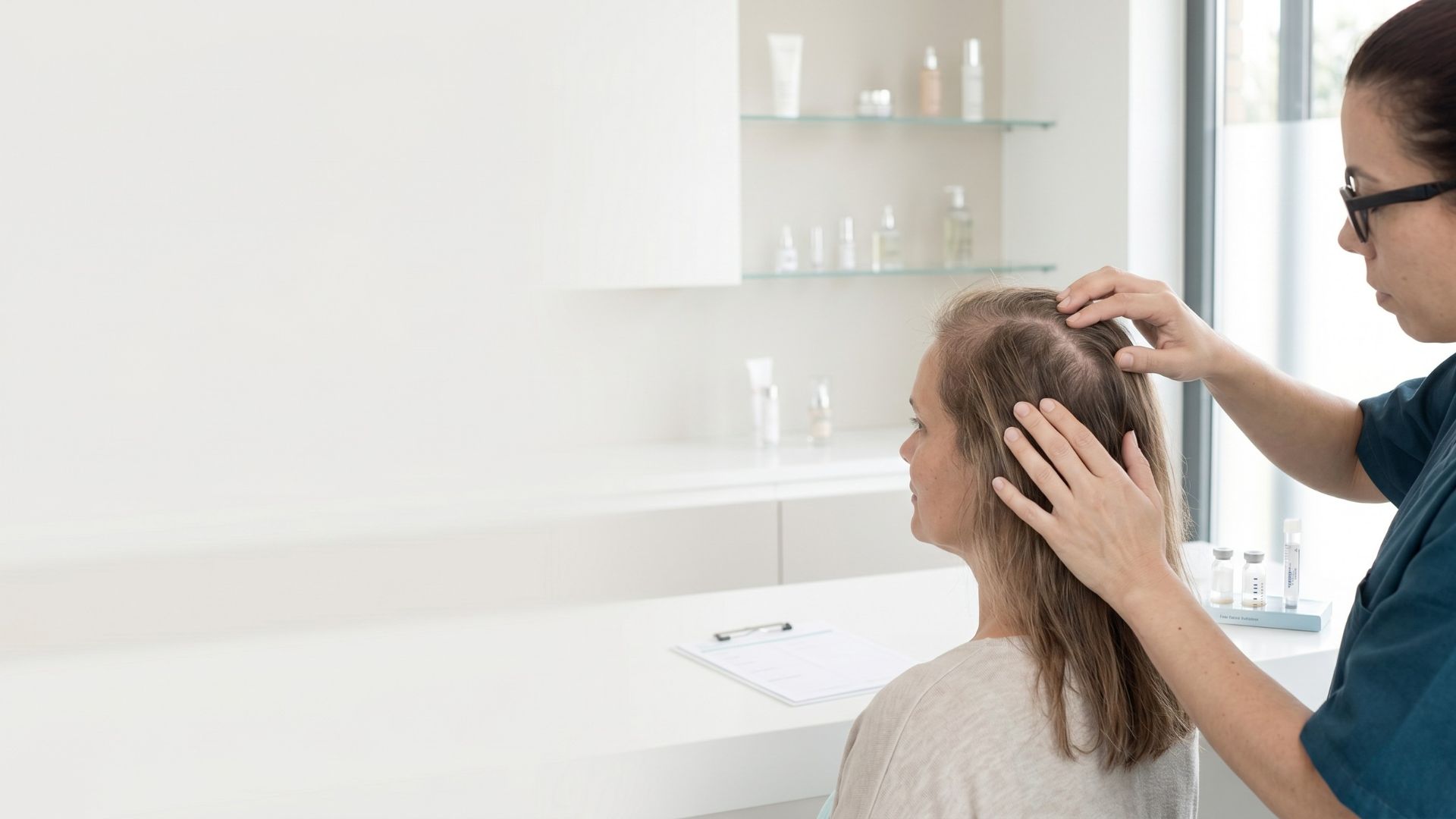
Living organisms are not passive. When damage occurs, the body activates a cascade of biological responses designed to repair tissue, prevent infection, and restore function. This is not a modern discovery: it is one of the most fundamental principles of how living systems work.
Among the key players in this repair process are platelets. When platelets break down at the site of an injury, they release growth factors — proteins stored in structures called alpha granules — that signal surrounding cells to regenerate, multiply, and form new blood vessels.
For decades, various branches of medicine have used biostimulation with platelet growth factors to accelerate recovery from different kinds of injuries. Hair restoration is one of its most valuable applications.
«Platelet growth factor biostimulation harnesses the body's own repair mechanisms — not to override biology, but to work with it».
How it works
Hair is cyclical. PRP works with that cycle.
Hair is not static: it follows a biological cycle of growth, rest, and shedding. Each follicle moves through these phases independently, which is why hair loss and regrowth happen gradually rather than all at once.
When hair loss accelerates, it often means more follicles are spending time in the shedding phase and fewer in the growth phase. Biostimulation with platelet growth factors works by interrupting that pattern: it aims to shorten the shedding phase and encourage follicles to enter and remain in active growth.
According to the source article, active shedding is reduced by 50% after two weeks, and close to 100% one month after application. The treatment is also associated with the development of thicker, better-quality hair. These figures are reported in the original article and should be understood as part of the clinical framing of the procedure, not as guaranteed individual outcomes.
The procedure
Three steps. Approximately 40 minutes.
Blood draw
A small sample of the patient's own blood is collected, using the same process as any standard blood test.
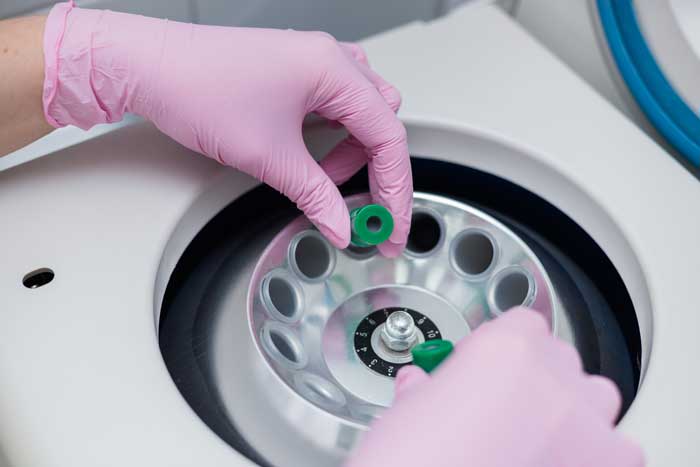
Processing
The sample is processed within minutes to obtain a concentrated platelet preparation, rich in growth factors.
Application
The platelet concentrate is injected directly into the scalp in the areas requiring treatment.
Why it stands out
Five reasons PRP stands out in hair restoration
Uses the patient's own blood
Because the treatment is autologous, drawn from the patient's own body, it does not cause rejection or adverse reactions associated with foreign materials.
Short outpatient procedure
The treatment takes approximately 40 minutes. It is performed in a clinical setting and does not require hospitalization or disability time.
Performed by a specialist
The procedure is carried out by a trichologist dermatologist, ensuring that the evaluation, application, and follow-up are medically guided.
Useful in female alopecia
Biostimulation with platelet growth factors is an excellent alternative for the treatment of female alopecia, a condition that is frequently undertreated despite its prevalence.
Complementary to other treatments
PRP can be used alongside other hair restoration protocols, and is particularly useful for patients who cannot use finasteride or minoxidil.
Female hair loss is one of the most common and least addressed conditions in hair restoration medicine. PRP is particularly relevant here, because it offers a regenerative, outpatient path for women experiencing active shedding or reduced density, without the limitations that some pharmaceutical options present.
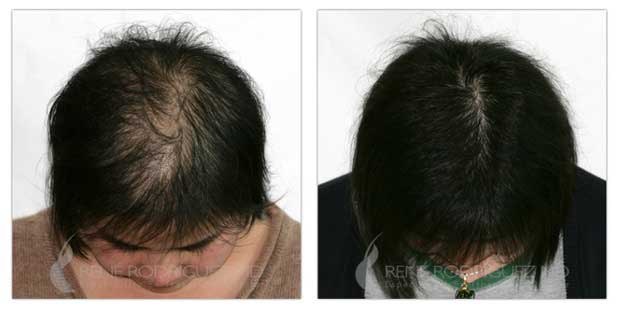
It is not a universal solution, and no treatment is. But for many women, biostimulation with platelet growth factors represents a meaningful step forward — one that works with the body rather than against it.
Platelet-rich plasma is not positioned here as a miracle treatment. It is a regenerative option that draws on biological processes already present in the body, applies them in a controlled clinical setting, and has a track record of use across multiple branches of medicine.
Whether it is appropriate for your specific case depends on an individual evaluation. The right starting point is always a consultation with a specialist who can assess your hair loss pattern, your overall health, and whether PRP makes sense as a standalone or complementary treatment.
Escrito por Dr. René Rodríguez